


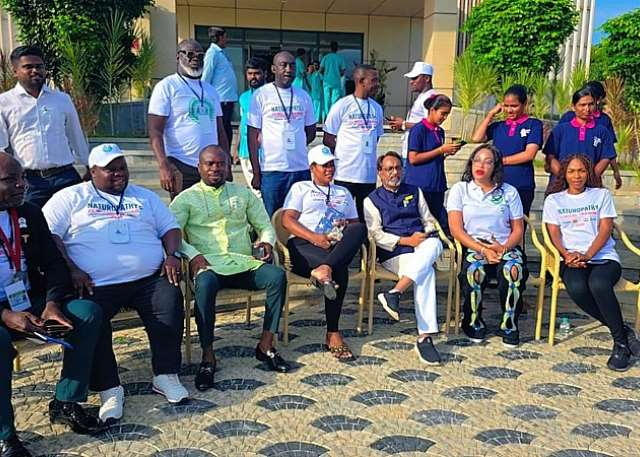

The International Association for Quality Assurance in Pre-Tertiary and Higher Education (QAHE) and the African Naturopathic Federation (ANF) have signed a memorandum of understanding on education quality in naturopathy and complementary and alternative medicine. QAHE chairperson Natasha Perkins signed on 22 September 2026. Prof. Raphael Nyarkotey Obu, Esq, founding president of ANF, signed on 25 September. The instrument runs for three years from the later date. Each side pays its own costs unless a later paper says otherwise.
For a business reader, the useful distinction is between a professional body trying to build a market and a quality-assurance body that has refused to pre-sell entry to that market. ANF was formed on 12 March 2026 by 21 practitioners from 11 African countries. Its registered office is in Ghana and its headquarters are in Namibia. It wants coherent, locally usable standards for naturopathy and CAM, and, in its own public statements, legal recognition of the profession and a continental training benchmark. QAHE reviews educational providers against its published process. The memorandum records an intention to talk about standards, institutional development and quality assurance. It does not accredit anyone, register anyone, or permit anyone to treat a patient.
The cooperation has four stated aims. The parties intend to draft voluntary educational benchmarks for programmes that choose to take part, covering learning outcomes, minimum resources, supervised clinical learning and assessment. They intend to help institutions with internal quality assurance, governance, faculty development, student protection and teaching that can point to evidence. Eligible schools may apply to QAHE on their own. The memorandum gives no promise of approval and no queue-jump. The fourth aim is ordinary professional traffic: dialogue, research, workshops and academic collaboration where it is appropriate.
The work list is more specific than a courtesy signing. The two sides may look together at competency frameworks, programme levels, training hours, clinical supervision, assessment, ethics and patient safety, with qualified specialists in the room. They may exchange guidance that is not confidential, on self-evaluation, programme review, governance, complaints, learning resources and improvement. Seminars, assessor training, educator development, conferences, publications and research can follow, but only against an agreed work plan and budget. That budget clause matters. A continental standard-setting exercise is cheap to announce and expensive to staff.
Nyarkotey College of Holistic Medicine in Ghana is named as a possible pilot for a readiness assessment or other agreed support. Obu is also president of that college, so the pilot sits close to the federation’s founding office. The memorandum requires a separate written arrangement and consent before any pilot work, and a separate application before any accreditation. Other ANF member institutions join only through activities that are approved one by one. Membership of the federation is not a ticket.
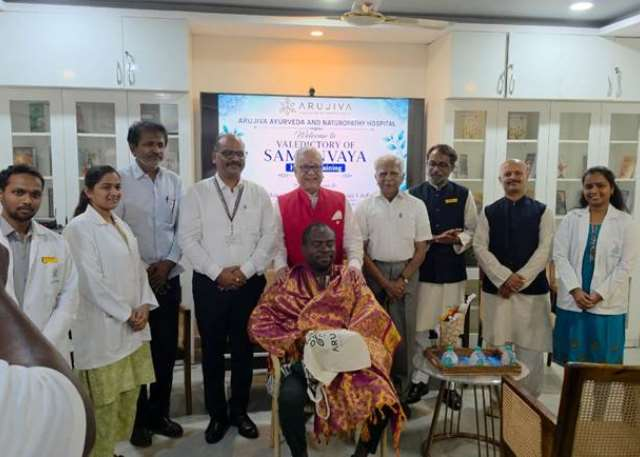
QAHE may, if it agrees in writing and if ANF’s own rules allow, nominate up to two qualified people as external technical advisers to ANF’s Education Committee. The term is one year and can be renewed. Advisers may attend meetings, comment on drafts, and help with training. They cannot bind either organisation, vote on ANF governance, or act as a regulator. The committee is barred from conducting, influencing or pre-judging a QAHE accreditation decision. QAHE keeps sole control of its assessors, criteria, process and outcome. That separation is the part a school, an insurer or a ministry should read twice. An adviser in the room is not an assessor with a form already filled.
The exclusions are written in. The memorandum confers no accreditation, no professional registration, no statutory recognition and no permission to practise. Pilot status creates no entitlement. The parties must not describe QAHE accreditation as the same thing as recognition by a national education regulator, a ministry, a statutory professional council, or the authorities of another country. Neither side may promise a licence, a right to practise, degree-awarding powers, or recognition of a qualification by a third party. Voluntary benchmarks have to sit inside national law. They must not be used to authorise a clinical procedure outside the lawful scope of practice, or without the supervision that law requires.
The first-year timetable is short. Each party names a focal person within 30 days of the effective date and aims to meet at least twice a year. The indicative plan is to confirm those names and any adviser nominations, map educational standards already in use in Africa, hold a joint faculty and quality-assurance workshop, consult stakeholders on draft benchmarks, and review the year. QAHE’s own account of the signing calls the memorandum a channel for technical dialogue with a continental professional body, not a shortcut to accreditation. Institutions that apply later will be judged under the published process.
The commercial background is a profession that is widely used and unevenly regulated. Naturopathy, including plant remedies and other natural therapies, is an established part of care in many African settings. The Food and Agriculture Organization’s Forest and Farm Facility, marking World Health Day, described ANF as a body set up to strengthen traditional and natural medicine systems and to advance legal recognition. One founding member is the Traditional Healers Assembly of The Gambia, known as TRAHASS, which says it has more than 1,500 members and worked with the Gambian Ministry of Health on a traditional, complementary and alternative medicine policy in 2025. Its national president, Salieu Puye, called the federation a step toward preserving traditional medicine. That is advocacy. It is not the same document Perkins and Obu signed.
Schools and clinics reading the September memorandum for a business decision should treat it as a standards conversation with a three-year clock, a named Ghanaian college as a possible first case, and a hard line under practice rights. A benchmark, if one is drafted, will be voluntary. A QAHE listing, if one is later granted, will be an educational quality decision. Neither is a licence.


