
spot_img
Home Blog Page 24

Strengthening Educational Standards: The Role of QAHE’s Partnerships

0
QAHE educational partnerships

In the realm of education, the importance of maintaining high standards cannot be overstated. As the landscape of educational institutions evolves, the need for robust quality assurance mechanisms becomes increasingly vital. The International Association for Quality Assurance in Pre-Tertiary and Higher Education (QAHE) recognizes this necessity and has established a network of esteemed partners dedicated to enhancing educational quality globally. This article explores the significance of QAHE’s partnerships and how they contribute to the advancement of quality assurance in education.

The Importance of Partnerships in Education

Education is a collaborative endeavor, and partnerships play a crucial role in fostering an environment of continuous improvement. By collaborating with various accrediting bodies and organizations, QAHE aligns its accreditation processes with globally recognized standards. This alignment ensures that institutions seeking accreditation meet rigorous quality benchmarks, ultimately benefiting students and communities.

QAHE’s partnerships extend beyond national borders, encompassing both international and regional accrediting agencies. This diversity enriches the collective capability to evaluate and support educational programs, promoting accountability and transparency across the education sector. By working together, these organizations can share best practices, resources, and insights, enhancing the overall quality of education.

Notable QAHE Partnerships

Among QAHE’s prominent partners is the National Agency for Quality Assurance in Education and Research (ANACEC) in Moldova. This collaboration underscores a shared commitment to improving quality assurance practices and educational standards within the region. By aligning efforts, both organizations aim to foster an educational environment that prioritizes excellence and accountability.

Another significant partnership is with the Accreditation and Rating International Agency (ARIA) in Uzbekistan. This collaboration facilitates reciprocal recognition of accredited institutions, promoting academic collaboration and mobility. Such partnerships are essential for creating pathways that enhance the educational experience for students across borders.

Additionally, QAHE engages with the Independent Accreditation Agency “Elbaasy” in the Kyrgyz Republic, which is dedicated to enhancing educational quality through rigorous accreditation processes. This partnership is pivotal in ensuring that institutions in the region adhere to high standards, ultimately benefiting students and the community.

In Europe, the collaboration with the Foundation for International Business Administration Accreditation (FIBAA) in Germany strengthens QAHE’s efforts to uphold international standards in business education. This partnership enhances the credibility of business programs and provides institutions with the tools needed to compete in a globalized educational landscape.

Regional Collaborations

QAHE also collaborates with regional organizations like the Ghana National Council of Private Schools (GNACOPS). This partnership plays a vital role in shaping the education landscape across Ghana, ensuring that private educational institutions meet established quality standards. By working closely with local organizations, QAHE can address specific regional challenges and contribute to the overall improvement of education.

Another noteworthy collaboration is with the Tamilnadu Council for Open and Distance Learning (TCODL) in India. This partnership marks a significant milestone in promoting quality assurance in open and distance education, a sector that is rapidly expanding and evolving. By focusing on this area, QAHE and TCODL aim to enhance educational access and opportunities for learners in diverse contexts.

Global Impact and Commitment

QAHE’s partnerships extend globally, with collaborations that emphasize a commitment to elevating educational standards. The Arab Organization for Quality Assurance in Education (AROQA) focuses on improving educational quality in the Arab world. This partnership is essential in addressing the unique challenges faced by educational institutions in the region and promoting a culture of quality assurance.

Furthermore, the collaboration with the International Confederation of Higher Education (ICHE) exemplifies QAHE’s dedication to fostering global best practices in quality assurance. By working together, these organizations can create frameworks that ensure educational institutions not only meet but exceed quality expectations.

QAHE has also established partnerships with the Independent Institute for Accreditation, Rating, and Certification (IARC/NIARS) in the Kyrgyz Republic and the Agency for Accreditation of Educational Programs and Organizations (AAEPO). These partnerships aim to improve the competitiveness of vocational education in the region, ensuring that institutions provide relevant and high-quality training for students.

The collaboration with the Agency of Quality and Rating Accreditation (AQRA) in the Kyrgyz Republic further reinforces QAHE’s commitment to enhancing educational quality. By aligning efforts, these organizations can share expertise and resources, ultimately benefiting students and educators alike.

Supporting Sustainable Development Goals

QAHE proudly supports the Sustainable Development Goals (SDGs), particularly Goal 4, which emphasizes the importance of inclusive and equitable quality education. By fostering partnerships and promoting quality assurance practices, QAHE and its partners contribute to creating educational opportunities for all learners, regardless of their background.

Moreover, the collaboration with the Distance, Open and e-Learning Practitioners’ Association of East Africa (DOLPA-EA) highlights the commitment to ensuring access to education as a fundamental human right. Together, they work toward breaking down barriers to education and creating innovative solutions that empower learners.

Conclusion

In conclusion, the partnerships established by QAHE play a critical role in enhancing the quality of education globally. By collaborating with esteemed accrediting bodies and organizations, QAHE fosters a culture of continuous improvement, accountability, and transparency in educational practices. These partnerships not only benefit institutions seeking accreditation but also contribute to the overall advancement of education worldwide.

As QAHE continues to expand its network of partners, it remains committed to its mission of ensuring that every learner receives a high-quality education that meets their needs and aspirations. Through collaboration and shared goals, QAHE and its partners are paving the way for a brighter future in education. For more information about QAHE and its partnerships, visit www.qahe.org.


Navigating Financial Difficulties: Strategies for Institutions to Raise Funding in Developing Countries

0
funding strategies for institutions

In the face of financial difficulties, educational institutions in developing countries often find themselves at a crossroads. Limited resources, rising operational costs, and decreasing enrollment can pose significant challenges to their sustainability and growth. However, there are several strategies that these institutions can adopt to raise funding and secure their future. From diversifying income streams to fostering community partnerships, this article will explore effective methods for institutions to navigate financial hardships.

Diversifying Funding Sources

One of the most effective strategies for institutions facing financial difficulties is to diversify their funding sources. Relying solely on government funding or tuition fees can be risky, especially during economic downturns. Institutions should explore alternative revenue streams, such as grants, donations, and private partnerships. By applying for grants from international organizations, foundations, and government agencies, institutions can secure funds for specific projects or initiatives. Additionally, engaging alumni for donations can create a sustainable source of funding. Alumni often have a vested interest in their alma mater’s success and may be willing to contribute financially.

Establishing Partnerships

Building partnerships with local businesses, NGOs, and community organizations can provide institutions with additional resources and support. Collaborative initiatives can lead to shared funding opportunities, joint programs, and resource sharing. For instance, partnering with local businesses for internships or training programs can create mutually beneficial relationships that enhance students’ employability while providing businesses with a skilled workforce. These partnerships can also open doors to sponsorship opportunities, where businesses may fund scholarships or specific programs in exchange for visibility and community goodwill.

Embracing Technology and Online Learning

The rise of digital education presents institutions with new funding opportunities. By developing online courses or programs, institutions can reach a broader audience, including international students, who may be willing to pay higher tuition fees. Online learning not only reduces operational costs but also increases enrollment potential. Institutions can also explore micro-credentialing or short courses that cater to specific skill sets in demand in the job market. By offering flexible learning options, institutions can attract diverse learners and generate additional revenue.

Implementing Fundraising Campaigns

Conducting targeted fundraising campaigns can also be an effective way to raise funds. Institutions can launch campaigns focused on specific needs, such as infrastructure development, scholarships, or research initiatives. Utilizing social media platforms and crowdfunding websites can amplify these efforts by reaching a global audience. By sharing compelling stories about the institution’s impact and the challenges it faces, institutions can connect with potential donors who resonate with their mission. Engaging students, faculty, and alumni in these campaigns can further enhance visibility and support.

Leveraging Government and International Support

In many developing countries, government programs and international organizations offer financial support for educational institutions. Institutions should actively seek out these opportunities and engage with governmental bodies to explore funding options. Many governments have initiatives aimed at improving education, especially in underserved areas, and institutions can position themselves as key players in these efforts. Additionally, international organizations often have programs designed to bolster education in developing countries, providing grants and resources for capacity building.

Enhancing Community Engagement

Building strong ties with the local community can also lead to increased funding. Institutions should engage with community members, local leaders, and parents to foster a sense of ownership and pride in the institution. Hosting community events, workshops, and open houses can raise awareness about the institution’s needs and achievements, encouraging community members to contribute financially or in-kind. By demonstrating the institution’s value to the community, institutions can cultivate a supportive environment that is more likely to contribute to its funding needs.

Developing a Robust Marketing Strategy

A well-planned marketing strategy can help institutions attract more students and funding. By highlighting unique programs, success stories, and community impact, institutions can enhance their visibility and appeal. Utilizing digital marketing, social media, and traditional advertising can help reach prospective students and potential donors. Institutions should also focus on building a strong online presence, showcasing their achievements, and engaging with their audience through regular updates and success stories.

Creating Endowment Funds

Establishing an endowment fund can provide long-term financial stability for institutions. Endowment funds are designed to generate income through investments, allowing institutions to rely on the interest generated for operational costs, scholarships, and program funding. While building an endowment takes time and initial capital, it can create a sustainable source of funding that supports the institution’s mission for years to come. Institutions can engage alumni and community members in this effort, encouraging them to contribute to a fund that will benefit future generations.

Prioritizing Financial Management and Accountability

Effective financial management is crucial for institutions seeking to navigate financial difficulties. Institutions should prioritize transparency and accountability in their financial practices, ensuring that funds are managed efficiently and responsibly. Regular financial audits, clear budgeting processes, and transparent reporting can build trust with stakeholders, including donors and government agencies. By demonstrating sound financial practices, institutions can enhance their credibility and attractiveness to potential funders.

Conclusion

In conclusion, educational institutions in developing countries face significant financial challenges, but there are numerous strategies they can employ to raise funding and secure their future. By diversifying funding sources, establishing partnerships, embracing technology, and engaging with the community, institutions can create sustainable financial models that support their mission. With a proactive approach to fundraising and financial management, institutions can navigate financial difficulties and continue to provide quality education to their students. Ultimately, the resilience and creativity of these institutions will play a crucial role in shaping the future of education in their regions.

Celebrate Excellence with the Young Achiever Award from QAHE

0
Young Achiever Award by QAHE

In today’s competitive educational landscape, recognizing and celebrating the achievements of young individuals is more important than ever. The International Association for Quality Assurance in Pre-Tertiary and Higher Education (QAHE) understands this need and has established the Young Achiever Award to honor exceptional young talents. This prestigious award aims to spotlight students who demonstrate outstanding academic performance, leadership qualities, and a commitment to community service.

The Young Achiever Award is open to students aged between 12 and 25 years. It seeks to encourage young individuals to strive for excellence in their academic pursuits while recognizing their contributions to society. By highlighting the importance of academic excellence, leadership, and community service, the award aims to foster the development of well-rounded individuals who can positively impact their communities.

One of the unique aspects of the Young Achiever Award is its inclusive approach. The selection process involves a comprehensive review of academic records, extracurricular activities, community service, and leadership skills. This holistic evaluation ensures that all deserving candidates are considered based on their merits and contributions.

In the current climate, where safety is paramount, QAHE has adapted to ensure that the award remains accessible. Instead of a physical ceremony, winners will receive a digital certificate and be recognized on QAHE’s official website and social media platforms. This approach not only prioritizes safety but also allows for broader recognition of the awardees, reaching a global audience.

To support the administrative costs associated with processing applications, a nominal administrative fee of US$400 is required from eligible applicants. However, in recognition of the financial challenges some may face, QAHE offers a 20% discount for candidates from developing countries. This commitment to affordability reflects QAHE’s dedication to promoting excellence in education for all, regardless of economic background.

The Young Achiever Award is more than just a recognition; it is a testament to QAHE’s commitment to nurturing the next generation of leaders. By honoring exceptional academic achievements, QAHE inspires young individuals to reach their full potential. This award serves as a powerful motivator for students to continue excelling in their studies and contributing positively to their communities.

In conclusion, the Young Achiever Award is a wonderful opportunity for young talents to gain recognition for their hard work and dedication. QAHE encourages educators, parents, and community leaders to nominate outstanding young individuals who exemplify excellence in academics, leadership, and service. Together, we can celebrate the achievements of our youth and inspire them to strive for greatness.

To learn more about the Young Achiever Award and to apply, visit QAHE’s official page. Let us honor the bright minds of tomorrow and help them shine even brighter!

QAHE Announces Honorary Professor of Practice Award for Shameem Kazmi

0
Honorary Professor of Practice award for Shameem Kazmi

The International Association for Quality Assurance in Pre-Tertiary and Higher Education (QAHE) is excited to announce that Shameem Kazmi has been awarded the Honorary Professor of Practice in Leadership and Innovation by Kennedy University and QAHE. This prestigious recognition highlights Kazmi’s exceptional contributions to the fields of food science, materials technology, and environmental sustainability.

Shameem Kazmi has established himself as a leader in his field, demonstrating a profound commitment to advancing knowledge and fostering development across various disciplines. As a Fellow of several esteemed organizations, including the Institute of Food Science and Technology and the Institute of Leadership, Kazmi’s expertise is widely recognized. His work embodies a dedication to innovation and sustainable practices, crucial in today’s rapidly evolving global landscape.

Kazmi’s impressive track record includes numerous accolades for his innovative approaches to sustainability. His contributions have not only advanced scientific understanding but have also inspired others to pursue excellence in their respective fields. These achievements underscore his role as a catalyst for positive change and a mentor to aspiring professionals.

In addition to his practical contributions, Kazmi is an accomplished author. His upcoming book, “Powering a Sustainable Future: Lunar Resources, Limitless Energy and Shared Responsibility,” promises to explore the complexities and potential of Helium-3, a resource with significant implications for future energy production and space exploration. This work reflects his forward-thinking approach and his commitment to addressing the pressing challenges of our time.

QAHE and Kennedy University commend Shameem Kazmi for his outstanding leadership and innovative spirit. His appointment as Honorary Professor of Practice is not only a recognition of his past achievements but also an anticipation of his future impact on education and sustainability. Kazmi’s involvement with QAHE is expected to enhance the organization’s mission to promote excellence in education and leadership globally.

As QAHE continues to foster partnerships with visionary leaders like Kazmi, it reinforces its commitment to improving educational standards and promoting sustainable practices in various fields. This award serves as an inspiration to educators and professionals alike, emphasizing the importance of leadership and innovation in shaping a better future.

For more information about QAHE and its initiatives, please visit www.qahe.org.

QAHE Announces Appointment of Mr. Kennedy Mwansa as Honorary Fellow

0
Kennedy Mwansa Honorary Fellow

The International Association for Quality Assurance in Pre-Tertiary and Higher Education (QAHE) is pleased to announce the appointment of Mr. Kennedy Mwansa Honorary Fellow. Mr. Mwansa, who serves as the President of the Zambian Open Private Schools Association (ZOPSA), has been a pivotal figure in advocating for the inclusion and recognition of private schools within Zambia’s educational framework.

Under Mr. Mwansa’s leadership, ZOPSA has made significant strides in addressing the educational needs of private institutions. His advocacy efforts have focused on enhancing the quality of education and ensuring that private schools play a vital role in the country’s educational landscape. ZOPSA has been instrumental in supporting the Zambian government’s “Education for All” policy, which promotes access to free education, expands student loan availability, and invests in new school infrastructure. Recognizing his impactful contributions, Kennedy Mwansa Honorary Fellow status underlines his commitment to educational excellence.

A notable achievement during Mr. Mwansa’s tenure has been the recruitment of qualified teachers, with impressive numbers reflecting the government’s commitment to improving the teacher-pupil ratio. In 2022 alone, 30,496 teachers were recruited, followed by 7,222 in 2023, with an additional 4,200 planned for 2024. These efforts are essential for not only enhancing educational quality but also for addressing the challenges posed by a rapidly growing student population.

Mr. Mwansa’s role in advocating for a Public-Private Dialogue (PPD) is another significant aspect of his leadership, strengthening his position as Kennedy Mwansa Honorary Fellow. This initiative encourages collaboration among educational stakeholders, ensuring that both public and private institutions work together to tackle common challenges. The PPD framework aims to foster a unified strategy for improving the quality and sustainability of Zambia’s education system, thereby benefiting all students across the nation.

QAHE recognizes Mr. Mwansa’s dedication to education and his substantial contributions to advancing educational quality in Zambia. His appointment as Kennedy Mwansa Honorary Fellow is a testament to the impact he has made in the educational sector and his commitment to promoting excellence in education.

As an Honorary Fellow, Mr. Mwansa will be actively involved in QAHE’s mission to enhance educational standards worldwide. QAHE is excited to welcome him into this role and looks forward to the positive influence he will bring to its initiatives.

For more information about QAHE and its various programs, please visit www.qahe.org.

QAHE Appoints Dr. Rebecca Wambua as Honorary Fellow

0
QAHE appoints Dr. Rebecca Wambua

The International Association for Quality Assurance in Pre-Tertiary and Higher Education (QAHE) has proudly announced the appointment of Dr. Rebecca Wambua as an Honorary Fellow. This prestigious recognition highlights Dr. Wambua’s significant contributions to the fields of distance, open, and e-learning, particularly within the East African region. Her extensive experience and leadership in the academic community make her a valuable addition to QAHE’s esteemed group of Honorary Fellows.

Dr. Wambua currently serves as the Chairperson of the Distance, Open and e-Learning Practitioners’ Association of East Africa (DOLPA-EA) International Multidisciplinary Conference Committee. With over 32 years of experience in the education sector, including 17 years at the acclaimed Riara Group of Schools and 15 years in various universities, she has been instrumental in advancing innovative educational methodologies. Her efforts have not only improved learning outcomes but have also set new standards in the delivery of education across diverse platforms.

In her capacity as a Commonwealth of Learning Consultant, Dr. Wambua has provided training to several institutions, including Maasai Mara University and the University of Eastern Africa, Baraton. Her focus on critical areas such as open and distance e-learning (ODeL) policy development and online pedagogy has equipped educators with the tools necessary to adapt to the evolving educational landscape. Dr. Wambua’s contributions in this area are particularly noteworthy, as they align with QAHE’s mission to promote quality education through rigorous standards and best practices.

Dr. Wambua is an active participant in numerous academic conferences, having recently spoken at the 7th African Council for Distance Education Triennial Conference and the Higher Education eLearning Technologies International Conference. Her engagement in these forums allows her to share insights and foster collaboration among educators, further enhancing the quality of distance education in the region.

As a senior lecturer at Africa Nazarene University, Dr. Wambua has held various leadership roles, including serving as the Coordinator of Master of Education programs and the Director of the Institute of Open, Distance and e-Learning. Her commitment to educational excellence is demonstrated through her involvement in the development of the National Open and e-Learning Framework and ODeL Centre Guidelines published by DOLPA-EA. These frameworks serve as essential resources for institutions aiming to implement effective distance learning programs.

In addition to her administrative and consultative roles, Dr. Wambua is also an accomplished author. She has written five books, co-authored nine instructional manuals, and edited twelve manuals for various educational institutions. Her dedication to promoting distance education is further evident in her organization of free webinars and workshops aimed at enhancing competency-based online learning.

QAHE‘s decision to appoint Dr. Rebecca Wambua as an Honorary Fellow reflects its commitment to recognizing outstanding leadership and contributions to quality education. Dr. Wambua’s expertise and dedication to advancing educational practices in East Africa align seamlessly with QAHE’s mission to uphold high standards in education.

As QAHE welcomes Dr. Wambua into its distinguished fellowship, it looks forward to her continued contributions to the field of education and her role in shaping the future of quality assurance in learning. Her appointment is not only a recognition of her past achievements but also a promise of the positive impact she will continue to have on the educational landscape.

Docenti QAHE Accreditation Renewal: Commitment to Excellence

0
Docenti QAHE accreditation renewal

In a significant milestone for educational excellence, Docenti Global Business School has successfully renewed its accreditation with the International Association for Quality Assurance in Pre-Tertiary & Higher Education (QAHE) for the 2025-2026 academic year. This renewal reflects the institution’s unwavering commitment to maintaining high educational standards and delivering quality learning experiences for its students.

The accreditation from QAHE is a testament to Docenti Global Business School’s continuous efforts in enhancing academic excellence. By meeting the rigorous quality benchmarks set by QAHE, the school demonstrates its dedication to providing a supportive and innovative learning environment. This achievement not only reinforces the school’s credibility but also affirms its position as a leader in the educational sector.

QAHE is a recognized authority in the field of educational accreditation, operating as an independent, non-governmental agency dedicated to ensuring the quality and integrity of educational institutions worldwide. The organization plays a crucial role in promoting excellence in education through rigorous standards and review processes. By accrediting institutions like Docenti Global Business School, QAHE helps ensure that educational offerings meet the necessary benchmarks for quality, thereby safeguarding the interests of students and stakeholders.

The accreditation process involves comprehensive evaluations that assess various aspects of an institution’s operations, including curriculum quality, faculty qualifications, and student support services. For Docenti Global Business School, this renewal underscores its commitment to continuous improvement and reflects its proactive approach to adapting to the evolving educational landscape. The school’s leadership emphasizes the importance of creating programs that not only meet local needs but also prepare students for success in the global marketplace.

As Docenti Global Business School moves forward with its renewed accreditation, it remains dedicated to delivering outstanding educational programs. The institution aims to equip students with the skills and knowledge necessary to thrive in a competitive environment. By fostering an atmosphere of innovation and collaboration, Docenti Global Business School prepares its graduates to become effective leaders and contributors to society.

Moreover, the partnership with QAHE enhances the school’s ability to engage with a broader network of accredited institutions and educational partners. This collaboration opens doors for academic exchange, joint programs, and greater opportunities for students. As part of the QAHE community, Docenti Global Business School aligns itself with a diverse group of institutions that share a commitment to high standards of educational quality.

In conclusion, the renewal of QAHE accreditation for Docenti Global Business School marks a significant achievement in its journey toward educational excellence. This recognition not only highlights the school’s dedication to providing quality education but also reinforces the role of QAHE in supporting institutions in their pursuit of excellence. As both organizations continue to work together, they contribute to shaping a brighter future for students and the broader educational landscape. With this renewed focus on quality and innovation, Docenti Global Business School is well-positioned to continue making a positive impact in the field of education.

Cutting Edge African Magazine Hosts Joint Award Presentation Ceremony with Prowess University and Pebble Hills University

0
African joint award ceremony

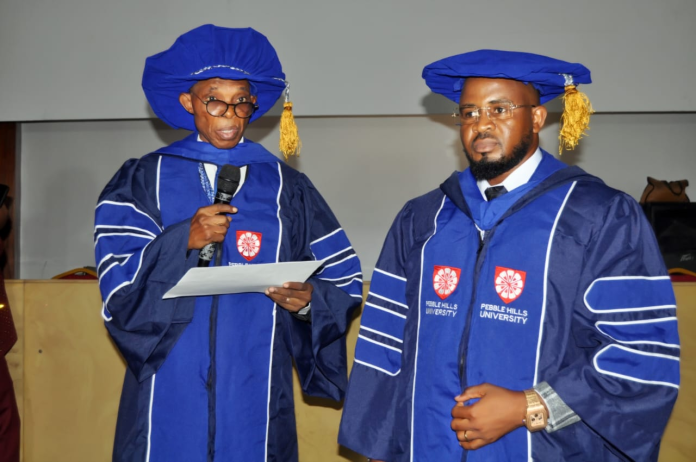
On March 29, 2025, the vibrant atmosphere of the University of Lagos will serve as the backdrop for a remarkable event hosted by Cutting Edge African Magazine in collaboration with Prowess University and Pebble Hills University. This Joint Award Presentation Ceremony is set to honor nine outstanding individuals for their significant contributions across various sectors, marking a celebration of excellence, leadership, and innovation.

The highlight of the event will be the presentation of Honorary Doctorate degrees to a select group of eminent personalities. Among the awardees, two distinguished individuals will receive honors from Pebble Hills University, while seven others will be recognized by Prowess University. These remarkable individuals have been chosen based on their exemplary impact in fields such as education, business, humanitarian services, governance, and social development. Their achievements embody the spirit of excellence that the African joint award ceremony aims to celebrate.

This joint initiative represents a collaborative effort to acknowledge and uplift those who inspire progress and change within Africa and beyond. The Honorary Doctorate awards are conferred upon individuals who have demonstrated exceptional leadership, philanthropy, and influence, thus setting a standard for others to aspire to. By hosting this prestigious event at one of Africa’s leading educational institutions, the organizers aim to inspire young scholars, professionals, and emerging leaders to pursue excellence in their respective endeavors.

The significance of the event extends beyond the awards themselves. It coincides with the official launch of a new edition of Cutting Edge African Magazine, which continues to serve as a platform for showcasing Africa’s brightest minds and transformative initiatives. Known for its groundbreaking features on leadership, development, and innovation, the magazine aims to highlight the stories of those making a positive impact on the continent.

The latest edition promises to be rich with content, including exclusive interviews with notable leaders and entrepreneurs, insightful articles on Africa’s economic and social development, and spotlight features on the award recipients and their inspiring journeys. By focusing on innovative ideas and trends shaping Africa’s future, the magazine reinforces its commitment to promoting dialogue and understanding in the region.

The event is expected to attract a diverse audience, including university officials, business leaders, government representatives, media professionals, and aspiring students. This gathering of influential personalities will provide a unique opportunity for networking, inspiration, and thought-provoking discussions. Attendees can look forward to engaging with distinguished speakers who will share their insights on leadership, innovation, and the challenges facing Africa today.

The collaboration between Cutting Edge African Magazine, Pebble Hills University, and Prowess University reflects a shared commitment to recognizing excellence in various fields. It emphasizes the importance of leadership and knowledge in driving positive change in society. As the event unfolds, it will serve as a reminder of the collective responsibility to uplift communities and foster an environment conducive to growth and innovation.

Furthermore, the Joint Award Presentation Ceremony encapsulates the essence of celebration and recognition within the African context. By honoring individuals who have demonstrated remarkable contributions to society, the event not only acknowledges their efforts but also inspires others to engage in similar pursuits. It reinforces the notion that excellence is achievable and that every individual has the potential to make a difference.

In conclusion, the upcoming Joint Award Presentation Ceremony at the University of Lagos is poised to be a landmark event that celebrates the spirit of excellence and leadership in Africa. As Cutting Edge African Magazine, Pebble Hills University, and Prowess University come together to honor distinguished individuals, they reinforce the importance of recognizing and promoting those who inspire progress and change. This event is not just a ceremony; it is a celebration of vision, a gathering of minds, and a testament to the potential of Africa to shape its future through dedication, innovation, and leadership.

Q Pulse Consulting Renews QAHE Accreditation

0
Q Pulse Consulting QAHE accreditation

In an important development for the consulting and education sectors, Q Pulse Consulting has successfully renewed its accreditation with the International Association for Quality Assurance in Pre-Tertiary & Higher Education (QAHE). This renewal, announced on April 23, 2025, signifies Q Pulse’s unwavering commitment to maintaining the highest standards of quality and excellence in its services.

Q Pulse Consulting has established itself as a recognized leader in providing innovative consulting solutions across various industries. The renewal of its QAHE accreditation is a testament to the firm’s dedication to delivering exceptional value to its clients and stakeholders. By adhering to rigorous quality assurance standards set forth by QAHE, Q Pulse ensures that its consulting practices meet the evolving needs of organizations looking for strategic guidance and effective solutions.

The QAHE accreditation process is comprehensive and involves thorough evaluations and assessments of an organization’s operational practices, service delivery, and overall impact. This meticulous review process reflects Q Pulse Consulting’s commitment to continuous improvement and excellence. The renewal not only enhances the firm’s credibility in the competitive consulting landscape but also reinforces its reputation as a trusted partner for organizations seeking to navigate complex challenges.

As part of this renewal, Q Pulse Consulting has demonstrated its capacity to innovate and adapt in a rapidly changing environment. The firm’s focus on empowering organizations through tailored strategies has allowed it to build strong partnerships and foster meaningful relationships with clients. By leveraging its expertise and experience, Q Pulse Consulting continues to provide impactful solutions that drive success and growth.

The significance of QAHE accreditation extends beyond individual organizations; it also contributes to the broader educational landscape. QAHE is dedicated to ensuring quality and integrity in education through its rigorous accreditation standards and processes. As a non-governmental and independent quality assurance agency, it plays a crucial role in promoting excellence in educational practices and outcomes. The accreditation of firms like Q Pulse Consulting aligns with QAHE’s mission to uphold high standards in the education sector, ensuring that organizations are equipped to deliver quality services.

Q Pulse Consulting’s renewed accreditation serves as a milestone that reflects its ongoing commitment to excellence. The firm remains dedicated to enhancing its service offerings while adhering to the highest quality standards. This achievement not only boosts the confidence of clients but also sets a benchmark for other organizations within the consulting industry.

The leadership at Q Pulse Consulting views this renewal as an opportunity to further its mission of empowering clients through innovative solutions. The firm is poised to continue its trajectory of growth and success, leveraging its accredited status to expand its reach and impact. By maintaining strong quality assurance practices, Q Pulse Consulting is well-positioned to respond to the dynamic needs of its clients and the challenges presented by an ever-evolving market.

In conclusion, the renewal of QAHE accreditation by Q Pulse Consulting is a significant achievement that underscores the firm’s dedication to quality and excellence in consulting services. It highlights the importance of adhering to rigorous quality assurance standards and the positive impact that such commitment can have on client relationships and organizational success. As Q Pulse Consulting moves forward, it will undoubtedly continue to set the standard for quality in the consulting sector, making a lasting contribution to the education and consulting industries.

QAHE Awards Honorary Fellowship to Prof. Adamu Abubakar Gwarzo

0
Honorary Fellowship to Prof. Adamu Abubakar Gwarzo

The International Association for Quality Assurance in Pre-Tertiary and Higher Education (QAHE) proudly announces the awarding of the prestigious Honorary Fellowship to Prof. Adamu Abubakar Gwarzo, a distinguished leader in the field of education and the current CEO and President of the African Association of Private Universities (AAPU). This recognition underscores Prof. Gwarzo’s significant contributions to higher education and his unwavering commitment to enhancing educational standards in Nigeria and beyond.

Prof. Gwarzo has played a pivotal role in shaping the strategic direction of AAPU, where he represents the organization in both public and official capacities. His leadership at AAPU is marked by a strong emphasis on collaboration among private universities across Africa, fostering an environment that encourages academic excellence and innovation. Under his guidance, AAPU has become a vital platform for addressing the challenges faced by private educational institutions, advocating for improved policies and practices that enhance the quality of education.

In addition to his role at AAPU, Prof. Gwarzo serves within the Faculty of Science at Abubakar Tafawa Balewa University (ATBU) in Bauchi, Nigeria. His academic focus spans various fields of research that contribute significantly to the development of science education and technology. Prof. Gwarzo’s dedication to advancing knowledge in these areas is evident through his numerous scientific studies and publications, which have made a lasting impact on both students and educators alike.

Prof. Gwarzo’s commitment to improving educational standards is reflected in his active involvement in various programs aimed at fostering academic excellence. His initiatives have addressed critical issues in education, including curriculum development, teacher training, and resource allocation. By promoting high standards in science and technology education, he has helped to prepare students for the challenges of a rapidly evolving global landscape.

The Honorary Fellowship awarded by QAHE is a testament to Prof. Gwarzo’s relentless pursuit of quality in education. This accolade recognizes not only his individual achievements but also his broader contributions to the educational landscape. Prof. Gwarzo has demonstrated exceptional leadership and vision, inspiring countless educators and students to strive for excellence in their academic pursuits.

As the educational sector continues to face challenges such as access, equity, and quality, leaders like Prof. Gwarzo are essential in driving positive change. His efforts to enhance educational standards in Nigeria serve as a model for other regions, illustrating the potential for private institutions to play a crucial role in national development.

QAHE, as a non-governmental and independent quality assurance agency, remains committed to recognizing individuals who have made significant contributions to the field of education. The organization is dedicated to ensuring quality and integrity within educational institutions, and the awarding of the Honorary Fellowship to Prof. Gwarzo aligns with this mission. It reflects QAHE’s commitment to honoring those who have shown outstanding dedication to improving education and promoting academic excellence.

In conclusion, the awarding of the Honorary Fellowship to Prof. Adamu Abubakar Gwarzo highlights the importance of leadership in education. His contributions to higher education, particularly in the realm of science and technology, will leave a lasting legacy. QAHE congratulates Prof. Gwarzo on this well-deserved recognition and looks forward to his continued impact in the field of education.