

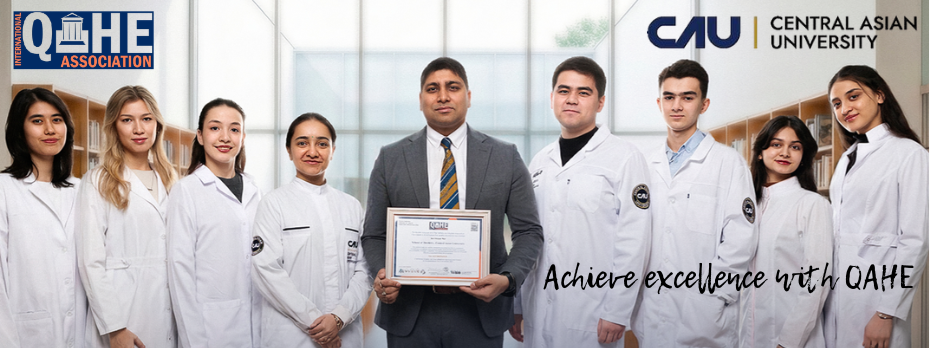

When the International Association for Quality Assurance in Pre-Tertiary and Higher Education (QAHE) was established in Delaware in the 2010s, it was one of many independent bodies entering an increasingly crowded field of educational accreditation. What has distinguished it since is not a claim to replace national regulators, but the speed and breadth with which it has constructed a web of formal partnerships across continents.
From the beginning, QAHE anchored its operations in a set of ISO certifications—ISO 9001:2015, ISO/IEC 17011:2017, ISO/IEC 17040:2005, ISO 20000:2018 and ISO 27001:2013. These standards shaped its internal processes and gave the organisation a technical language that national and regional agencies could recognise. Initially focused on higher education, the association expanded its formal scope in March 2023, renaming itself to explicitly cover pre-tertiary as well as higher education. The change signalled a deliberate move into K-12, vocational and online provision.
The real growth, however, has come through Memoranda of Understanding. After early agreements in 2022, 2023 became a turning point. QAHE signed with Moldova’s National Agency for Quality Assurance in Education and Research (ANACEC), a body embedded in European quality assurance networks. At the same time it formed multiple partnerships in the Kyrgyz Republic with agencies including “Sapattuu Bilim” (a full member of INQAAHE and APQN), the Independent Accreditation Agency “Elbaasy”, AAEPO and AQRA. In Indonesia it partnered with the Accreditation Council for Education (ACE), and in India with the Tamilnadu Council for Open and Distance Learning.
The following year produced one of its most visible arrangements: a dual accreditation pathway with the Independent Institute of Accreditation, Rating and Certification (IARC/NIARS) in Kyrgyzstan. Founded in 2019 and a full member of INQAAHE since 2023, IARC is the country’s leading accreditation agency. The memorandum allows institutions already accredited by QAHE to pursue coordinated recognition with IARC.
Latin America followed. In late 2024 QAHE concluded a reciprocal recognition agreement with the Mercosul Accreditation Agency (MACCA) in Brazil. In April 2025 it signed a further memorandum with the Brazilian Association of Distance Education (ABED), a non-profit society founded in 1995 and affiliated with the International Council for Open and Distance Education. In Mexico, a 2026 agreement with CONAED—the specialist council for law, criminology and criminalistics programmes established by the Mexican Bar Association—extended the network into programmatic accreditation.
Europe continued to expand. In March 2026 QAHE signed a Memorandum of Understanding with the Slovenian Quality Assurance Agency for Higher Education (NAKVIS), also known as SQAA. Established in 2010, NAKVIS is Slovenia’s central independent public body for quality assurance in higher education. It is a full member of ENQA, listed on EQAR, and a member of ECA, CEENQA and INQAAHE. The agreement provides for mutual recognition of standards, exchange of experts and reviewers, and sharing of research and policy updates, while preserving each organisation’s separate accreditation processes.
The Arab region has also come into view. In July 2026 QAHE signed a memorandum with the Arab League Educational, Cultural and Scientific Organisation (ALECSO), the Tunis-based specialised body of the League of Arab States that functions as a regional counterpart to UNESCO. The agreement covers collaboration on quality assurance, mutual recognition of standards and the exchange of expertise.
Other recent partnerships reflect the widening range of QAHE’s activity. In March 2026 it signed with the Eurasian Centre for Accreditation and Quality Assurance in Higher Education and Health Care (ECAQA) in Kazakhstan, a specialised agency for medical, pharmaceutical, nursing and public health education that is listed in national and international directories and holds membership in ENQA, INQAAHE and APQN. The same month it reached an agreement with the Central African Young Professionals Association (CYPA). In East Africa it is listed among partners of the Distance, Open and e-Learning Practitioners’ Association (DOLPA-EA). In Germany, a 2025 memorandum with the Foundation for International Business Administration Accreditation (FIBAA)—accredited by the German Accreditation Council—added a further European link. In October 2026 a memorandum with Vijoriya International Publications created an optional publication pathway for accredited institutions and awardees.
By 2025 QAHE reported that it had accredited more than 300 institutions. Its model remains that of an independent, fee-funded, non-governmental body. Recognition is built less through any single governmental endorsement than through a growing set of bilateral agreements that allow partner agencies to treat a QAHE review as a meaningful quality signal within their own networks. For institutions operating across borders—particularly private universities, online providers and vocational colleges—the practical effect is an expanding set of reference points that can be checked publicly.
Whether this networked approach will continue to expand, or whether national regulators will eventually seek tighter coordination with such independent bodies, remains an open question. What is clear is that, in little more than a decade, QAHE has moved from a Delaware-registered agency with a handful of ISO certifications to an organisation whose partnership map now stretches across Europe, Central Asia, Southeast Asia, Africa, Latin America and the Arab region.