spot_img
Home Blog Page 6

A professorship is an appointment: what a university requires, and what a Distinguished Professorship Award can add

0
Distinguished Professorship Award

A professorship is an appointment, not a title that can be collected. The route is long, and it is set by the institution that employs the person. A university asks for a doctorate or an equivalent research record, a body of peer-reviewed work, evidence of teaching, and, in many systems, supervised research and service on committees. A search committee reads the curriculum vitae, the publications and the references. A faculty board then recommends. The letter of appointment, not a certificate from elsewhere, is what makes someone a professor in that university.

The steps are ordinary and slow. A doctorate is completed and examined. The new scholar publishes in journals that a hiring panel will recognise, teaches, and takes on supervision only where the university has authorised it. Promotion from lecturer to senior lecturer, reader or associate professor depends on the local scale. A full professor is usually appointed after an external review of the record. Industry professionals sometimes enter by a practice route, but the institution still makes the appointment. No outside body can confer the post, the salary or the right to examine for that university.

Recognition sits beside that appointment. It does not replace it. The International Association for Quality Assurance in Pre-Tertiary and Higher Education, with Pebble Hills University, offers a Distinguished Professorship Award for educators, researchers and industry professionals whose work has had a substantial effect on a field. The page is at https://www.qahe.org/distinguished-professorship-award-with-phu/. It is aimed at university teachers with a strong teaching record, researchers whose work has advanced a subject, practitioners who have influenced education, and academic leaders inside an institution. Recipients are listed on the QAHE and PHU platforms.

The award is a recognition. It is not an employment contract, and it is not a chair at PHU or at any other university. It does not confer a doctorate, a habilitation, or authority to award qualifications. PHU is an international provider of online and offshore learning. It does not claim to be a national university, and a QAHE listing does not create that status. A holder may use the award description as given on the certificate. The wording should not say that the holder is a professor of a named university unless that university has appointed them.

A nomination is judged on the record. The useful file is a curriculum vitae, a list of publications or supervised work, and a short note of the contribution. A single certificate, or a title adopted without an appointment, will not carry it. Enquiries go to enquiry@qahe.org. The university that employs the candidate still decides the post. QAHE and PHU decide only whether the record supports the award.

From a finished draft to a public record: how peer-reviewed publication actually works

0
Peer-reviewed publication process

A research paper is not published because the author has finished writing it. It is published when an editor accepts it, a reviewer has tested the claim, and the journal assigns a permanent identifier. That sequence is slower and narrower than most first-time authors expect. The journals that will consider a paper are fewer than the journals that will take a fee, and the difference between the two is the whole of the task.

The work begins before the covering letter. A publishable paper has one question, a method that another researcher could repeat, and a result that does not exceed the evidence. An abstract that promises a transformation of the field, attached to a sample of twenty students and no comparison group, is the draft editors decline. The introduction should say what is already known and what this paper adds. The method should name the setting, the sample, the instrument and the analysis. Results should be separated from comment. A conclusion that repeats the abstract is wasted space. Tables need labels. Where the field requires it, ethics approval, consent and a conflict of interest belong in the text, not in a footnote added after rejection.

Journal choice is the next decision, and it is the one most often skipped. An author should read the last two issues, not the aims page alone. A monthly engineering journal will not rescue a school-leadership essay. A biannual multidisciplinary title may take a wider range of papers, but it still has a scope, a word limit and a reference style. The author guidelines are the contract. Length, file format, anonymisation for double-blind review, and the figure rules are not suggestions. A paper sent in the wrong format is often returned before a reviewer sees it.

The public record of a serious journal is checkable. An ISSN identifies the serial. A Crossref DOI identifies the article. Open access means the file can be read without a subscription. It does not mean the paper has been accepted, and it does not mean the journal is indexed by Scopus or the Web of Science. An impact factor quoted from Google Scholar is not the Clarivate figure. Authors should ask where the journal is indexed, who owns it, and whether the editorial board can be found at real institutions. A promise of acceptance within forty-eight hours, a single gmail address for the editor, and a fee demanded before review are the ordinary signs of a predatory outlet. Publication there can be cited. It can also be discounted by a university, a funder or an employer.

Submission is then clerical. Every author is named. The corresponding author uses the journal’s own form. A covering letter states the question, the finding and that the text is not under review elsewhere. Simultaneous submission is a breach, not a tactic. The article-processing charge should be written down before payment: what it covers, whether a hard copy is included, and whether the fee is refunded if the paper is rejected. International Journal of Engineering Research & Technology, for example, publishes a fee schedule for Indian and international authors and asks that papers go through its own system. Vijoriya International Journal for Research & Innovation states an open-access charge starting from US$10 and a double-blind review. Those figures are the journals’ figures. A partner who introduces an author does not change them, and does not decide acceptance.

Review is a filter, not a negotiation. A desk rejection means the editor did not send the paper out. A revise-and-resubmit letter is an offer, and the response should answer each point in order, saying what was changed and where. Arguing with the reviewer in the manuscript is how a revision fails. Rejection after review is ordinary. The useful move is to read the comments, repair the method or the claim, and send the paper to a journal whose scope fits. Once accepted, the author checks the proofs, confirms the title and the affiliations, and keeps the accepted manuscript. The DOI is the citation. A screenshot of an acceptance email is not.

Publication is the point at which the work can be put beside a record of scholarship, and it is the point at which recognition becomes possible. The International Association for Quality Assurance in Pre-Tertiary and Higher Education considers published authors for the Distinguished Scholar Award, which recognises exemplary achievement in education and research. The award page is at https://www.qahe.org/distinguished-scholar-award-recognizing-excellence-in-education-and-research/. A published paper is supporting evidence. It is not an automatic award, and a single article does not establish a scholarly career. Each nomination is read against the curriculum vitae, the list of publications and the contribution the author claims.

The current listing is US$650 for a digital certificate and a website profile, or US$850 for a hard-copy certificate and a website profile, plus a 5 per cent administration charge. The award is a recognition of scholarly contribution. It is not an academic degree. It does not confer a right to supervise research, and it does not confer authority to award qualifications. Authors who want a paper considered with a nomination can write to enquiry@qahe.org with the curriculum vitae, the publication link and a short note of the contribution. The journal decides whether the paper is published. QAHE decides whether the record supports the award. The two decisions are separate, and both should be described that way.

Dr Tamás Kovács named Honorary Professor of Practice in Science Education

0
Honorary Professor of Practice

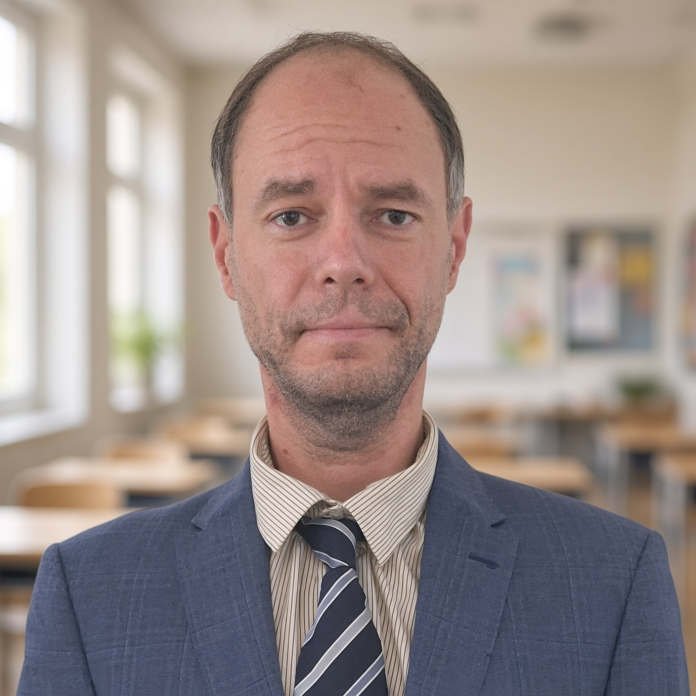
Dr Tamás Kovács, Head of Maths and Science at A&J School, has been awarded the honorary title of Honorary Professor of Practice in Science Education by the International Association for Quality Assurance in Pre-Tertiary and Higher Education (QAHE) and Kennedy University. The distinction marks a career that began in a Budapest chemistry laboratory and now runs a school department preparing students for universities in Britain, the United States and Europe.

Kovács took an MSc in Chemistry in 2004 and a PhD in Physical Chemistry in 2007, both from Eötvös Loránd University and both graded outstanding, the doctorate summa cum laude. His doctoral work was in combustion, plasma chemistry and catalysis. He taught mathematics and physical chemistry to undergraduates and supervised a master’s project before leaving for Leeds. From 2007 to 2016 he was a research fellow in the School of Chemistry and the School of Physics and Astronomy at the University of Leeds, working on combustion, nucleation and atmospheric chemistry. Collaborators named in his record include the National Centre for Atmospheric Research, the British Antarctic Survey, NASA, the Finnish Meteorological Institute and KTH Royal Institute of Technology. He records 45 publications, five of them books, and an h-index of 17. Papers from that period include work on crystal nucleation and on the atmospheric lifetime of sulphur hexafluoride.

He qualified as a physics teacher in 2017, with a PGCE from Leeds Beckett University, and taught at Heckmondwike Grammar School and Benton Park School. At University Centre Leeds he lectured in biomedical science and then managed the higher-education engineering programme, including apprenticeships and employer links. He is a Senior Fellow of Advance HE. Since October 2024 he has led maths and science at A&J School, teaching from primary level to the International Baccalaureate and mentoring university applicants. Recent writing listed in his curriculum vitae turns to STEM teaching, practical sessions in higher education, and questions in quantum foundations.

QAHE signs a cooperation memorandum with the Arab League’s education body.

0
QAHE ALECSO

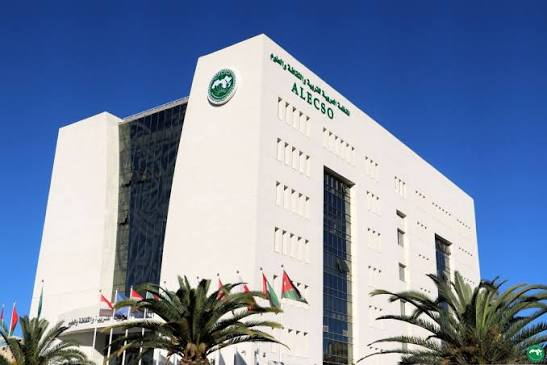
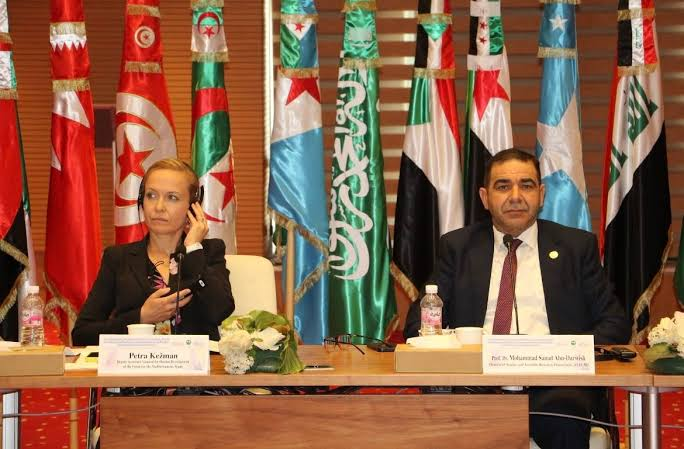
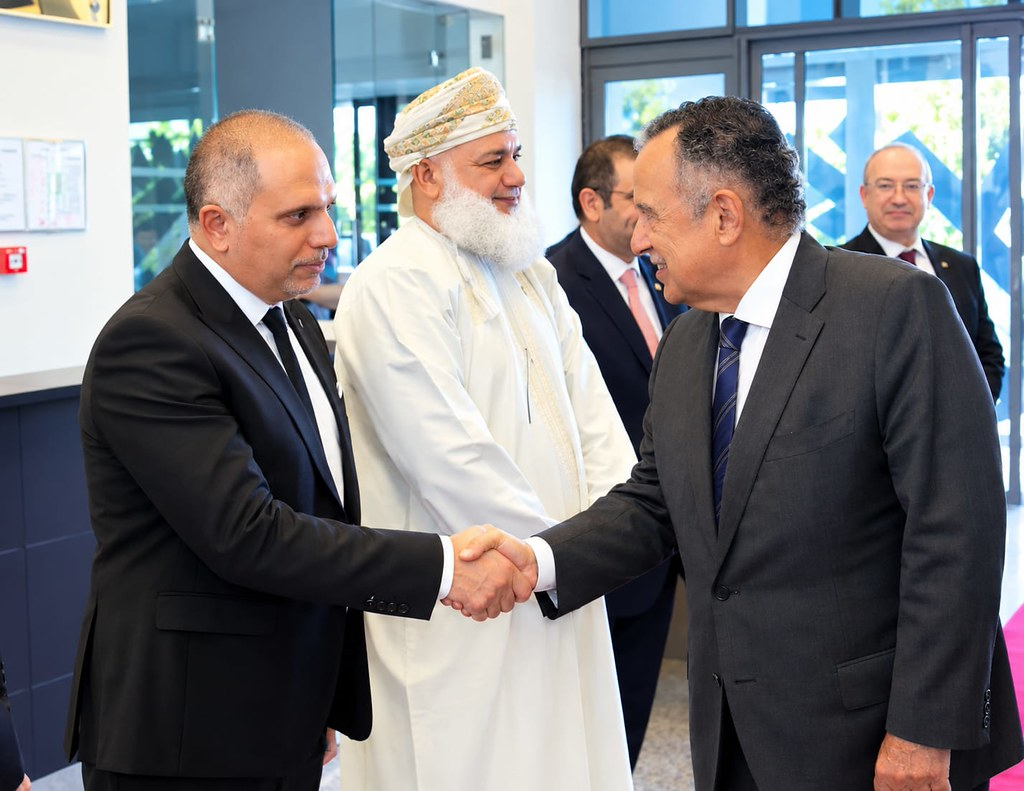
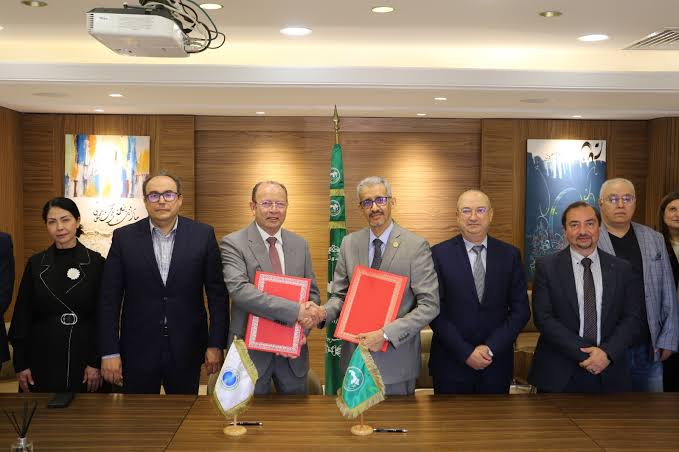
The International Association for Quality Assurance in Pre-Tertiary and Higher Education (QAHE) announced on 24 July 2026 that it had signed a memorandum of understanding with the Arab League Educational, Cultural and Scientific Organisation, known as ALECSO. The text published by QAHE is short. It names no signatory, sets no term, and states no fee. What it does name is a framework for accreditation and quality assurance, mutual recognition of standards, joint promotion of academic events, an exchange of expertise, and a route by which distinguished academics and professionals may be put forward for QAHE honorary fellowships.

ALECSO is not a university and not a private association. It is a specialised institution of the League of Arab States, announced in Cairo on 25 July 1970 under the Arab Cultural Unity Charter and now based in Tunis. Its constitution commits it to coordinating education, culture and science among Arab states, and to raising the level of culture in the region. Article 1 speaks of unity of thought in the Arab world through those three fields. Membership covers the League’s states. Jordan, Algeria, Sudan, Syria, Iraq, Kuwait, Libya, Egypt and Yemen were among the first, in 1970. The organisation’s own account of itself is of a regional body for intellectual cooperation. QAHE’s announcement goes further and calls it a regional equivalent of UNESCO. That is a comparison of function, not a legal status. ALECSO does not sit inside the United Nations system. Its authority is the authority its member governments have given an Arab League agency.

That distinction is the political content of the July signing. A memorandum with an Arab League body reads, on a website, as regional cover. In intergovernmental practice it is a cooperation paper. ALECSO coordinates. It does not, by signing with an external quality-assurance association, bind a ministry of higher education in Cairo, Riyadh, Tunis or Baghdad to accept that association’s listings. Recognition of a foreign qualification remains a national decision. So does the right to open a university, to use the title of a degree, and to license a profession. Nothing in the published memorandum says otherwise, because the published memorandum does not reach those questions.

The clauses that are present still need a plain reading. “Mutual recognition of standards” is the phrase most likely to be shortened in a brochure. On the face of QAHE’s notice, it means the two organisations may treat one another’s quality frameworks as a basis for cooperation. It does not mean a QAHE institutional listing is an ALECSO accreditation, or that an ALECSO programme is a QAHE accreditation. The same notice says eligible work may include joint events and the exchange of practice. Those are ordinary partnership items. They become political only if they are later described as a decision of the League.

The honorary fellowships are a separate track. QAHE uses them to recognise academics and professionals. An honorary fellowship is a distinction conferred by QAHE. It is not an academic degree, not a chair in a member-state university, and not a status ALECSO can convert into a public appointment. The memorandum, as published, offers an opportunity for such recognition. It does not attach a stipend, a vote, or a regulatory function.

QAHE itself is an independent body. Its full name is the International Association for Quality Assurance in Pre-Tertiary and Higher Education. It reviews institutions against its own published standards and lists those that meet them. An institutional listing is a quality-assurance decision by that association. It is not a ministry accreditation, not a substitute for national higher-education law, and not a separate accreditation of every programme an institution offers. Readers of the July notice should keep that limit even though the notice itself does not spell it out. ALECSO’s involvement does not enlarge it.

The announcement closes by saying QAHE looks forward to working with ALECSO over the coming years on quality assurance, educational development and academic collaboration. No work plan, focal point or review date is given. Until those exist, the political fact is the signature, not a programme. An Arab League agency and a private quality-assurance body have agreed to talk about standards and events. Member governments have not, by that agreement, been asked to change whom they recognise.

QAHE and the African Naturopathic Federation open a three-year talk on training standards, not a licence to practice

0
QAHE ANF education quality partnership

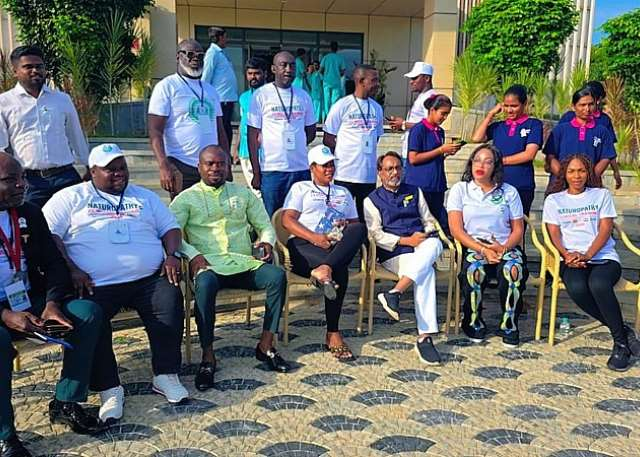
The International Association for Quality Assurance in Pre-Tertiary and Higher Education (QAHE) and the African Naturopathic Federation (ANF) have signed a memorandum of understanding on education quality in naturopathy and complementary and alternative medicine. QAHE chairperson Natasha Perkins signed on 22 September 2026. Prof. Raphael Nyarkotey Obu, Esq, founding president of ANF, signed on 25 September. The instrument runs for three years from the later date. Each side pays its own costs unless a later paper says otherwise.

For a business reader, the useful distinction is between a professional body trying to build a market and a quality-assurance body that has refused to pre-sell entry to that market. ANF was formed on 12 March 2026 by 21 practitioners from 11 African countries. Its registered office is in Ghana and its headquarters are in Namibia. It wants coherent, locally usable standards for naturopathy and CAM, and, in its own public statements, legal recognition of the profession and a continental training benchmark. QAHE reviews educational providers against its published process. The memorandum records an intention to talk about standards, institutional development and quality assurance. It does not accredit anyone, register anyone, or permit anyone to treat a patient.

The cooperation has four stated aims. The parties intend to draft voluntary educational benchmarks for programmes that choose to take part, covering learning outcomes, minimum resources, supervised clinical learning and assessment. They intend to help institutions with internal quality assurance, governance, faculty development, student protection and teaching that can point to evidence. Eligible schools may apply to QAHE on their own. The memorandum gives no promise of approval and no queue-jump. The fourth aim is ordinary professional traffic: dialogue, research, workshops and academic collaboration where it is appropriate.


The work list is more specific than a courtesy signing. The two sides may look together at competency frameworks, programme levels, training hours, clinical supervision, assessment, ethics and patient safety, with qualified specialists in the room. They may exchange guidance that is not confidential, on self-evaluation, programme review, governance, complaints, learning resources and improvement. Seminars, assessor training, educator development, conferences, publications and research can follow, but only against an agreed work plan and budget. That budget clause matters. A continental standard-setting exercise is cheap to announce and expensive to staff.

Nyarkotey College of Holistic Medicine in Ghana is named as a possible pilot for a readiness assessment or other agreed support. Obu is also president of that college, so the pilot sits close to the federation’s founding office. The memorandum requires a separate written arrangement and consent before any pilot work, and a separate application before any accreditation. Other ANF member institutions join only through activities that are approved one by one. Membership of the federation is not a ticket.

QAHE may, if it agrees in writing and if ANF’s own rules allow, nominate up to two qualified people as external technical advisers to ANF’s Education Committee. The term is one year and can be renewed. Advisers may attend meetings, comment on drafts, and help with training. They cannot bind either organisation, vote on ANF governance, or act as a regulator. The committee is barred from conducting, influencing or pre-judging a QAHE accreditation decision. QAHE keeps sole control of its assessors, criteria, process and outcome. That separation is the part a school, an insurer or a ministry should read twice. An adviser in the room is not an assessor with a form already filled.

The exclusions are written in. The memorandum confers no accreditation, no professional registration, no statutory recognition and no permission to practise. Pilot status creates no entitlement. The parties must not describe QAHE accreditation as the same thing as recognition by a national education regulator, a ministry, a statutory professional council, or the authorities of another country. Neither side may promise a licence, a right to practise, degree-awarding powers, or recognition of a qualification by a third party. Voluntary benchmarks have to sit inside national law. They must not be used to authorise a clinical procedure outside the lawful scope of practice, or without the supervision that law requires.

The first-year timetable is short. Each party names a focal person within 30 days of the effective date and aims to meet at least twice a year. The indicative plan is to confirm those names and any adviser nominations, map educational standards already in use in Africa, hold a joint faculty and quality-assurance workshop, consult stakeholders on draft benchmarks, and review the year. QAHE’s own account of the signing calls the memorandum a channel for technical dialogue with a continental professional body, not a shortcut to accreditation. Institutions that apply later will be judged under the published process.

The commercial background is a profession that is widely used and unevenly regulated. Naturopathy, including plant remedies and other natural therapies, is an established part of care in many African settings. The Food and Agriculture Organization’s Forest and Farm Facility, marking World Health Day, described ANF as a body set up to strengthen traditional and natural medicine systems and to advance legal recognition. One founding member is the Traditional Healers Assembly of The Gambia, known as TRAHASS, which says it has more than 1,500 members and worked with the Gambian Ministry of Health on a traditional, complementary and alternative medicine policy in 2025. Its national president, Salieu Puye, called the federation a step toward preserving traditional medicine. That is advocacy. It is not the same document Perkins and Obu signed.

Schools and clinics reading the September memorandum for a business decision should treat it as a standards conversation with a three-year clock, a named Ghanaian college as a possible first case, and a hard line under practice rights. A benchmark, if one is drafted, will be voluntary. A QAHE listing, if one is later granted, will be an educational quality decision. Neither is a licence.

Preah Sihamoniraja Buddhist University receives QAHE Excellence in Education Award for 2026–2027

0
Preah Sihamoniraja Buddhist University Award

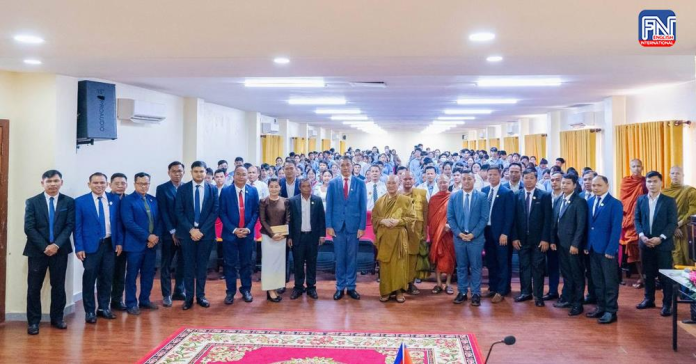
Preah Sihamoniraja Buddhist University in Phnom Penh has received the Excellence in Education Award for 2026–2027 from the International Association for Quality Assurance in Pre-Tertiary & Higher Education (QAHE). The award follows an evidence note submitted on 27 September 2026 and signed by Ngoun Sdechpheakdey, Vice Rector. It recognises a model built around weekend classes, full scholarships for students from Cambodia’s outer provinces, visiting international teachers, online delivery and an internal quality team. It is not a Cambodian government licence, and it does not by itself authorise the University to award qualifications.

The University sits at Svayporpe Pagoda, in front of the Russian Embassy, Sangkat Tonle Basac, Khan Chamkarmorn. Its international office uses inter.psbu.edu.kh, with contacts at info@psbu.edu.kh and inter@psbu.edu.kh. On its own letterhead it appears both as Preah Sihamoniraja Buddhist University and under the shorter public name PSB University Cambodia. The file sent to QAHE describes a Buddhist university that has pushed teaching beyond a weekday timetable: flexible classes, community outreach, scholarships, digital learning, visiting academics, faculty training, and technology-enabled work with partners abroad. The stated aim is access to study that is flexible, internationally connected and usable in working life, for students held back by distance, cost or a job.

QAHE is an independent quality-assurance body. Its full name is the International Association for Quality Assurance in Pre-Tertiary & Higher Education. It reviews institutions against its own published standards and lists those that meet them. An institutional listing is a quality-assurance decision. It is not a ministry accreditation, not a substitute for national higher-education law, and not a separate accreditation of every programme an institution offers. The Excellence in Education Award sits beside that work. It is given for a documented contribution to access, teaching and institutional practice. Holding it does not convert a professional or religious designation into a state degree, and it does not extend a listing to activity in another country unless QAHE says so.

That last point is in the University’s own note. PSBU has technology-supported teaching links with learners and partners in Sri Lanka, including an online Executive MBA pathway in logistics and supply-chain management. It told QAHE that this work must follow the rules of the country concerned, and that the Sri Lanka activity is not submitted as covered by its existing QAHE institutional accreditation. The award committee was asked to treat it as evidence of innovation, not as an extension of the listing.

What the note does put forward is a set of arrangements already running in Phnom Penh. Weekend and flexible classes are aimed at students who cannot keep a full-time weekday timetable, including those who live well outside the capital or who are combining study with work and family. The University says the point is not convenience alone. It is a way to widen participation while keeping a structured class, contact with staff, and access to specialist teachers.

The access argument is sharper in the scholarship section. PSBU says it offers 100 per cent scholarships aimed at at-risk and under-represented students from Cambodia’s outer provinces, where cost, distance and thin local provision can keep people out of higher education. The intended effects listed in the file are higher participation, lower financial barriers, a route into an internationally staffed campus, and a longer contribution to the communities those students come from. The University ties the scheme to Sustainable Development Goal 1, on poverty, and Goal 4, on quality education.

International teaching is described as regular, not ceremonial. Steve Cochrane, based in Bangkok, travels to Phnom Penh about twice a month for IELTS preparation, English and other classes, including weekend sessions. Kraiser Gilitwala comes about once a month for business classes; the file also includes a poster for a Career Excellence Development Program on communication, scheduled at the University’s Independence Hall. Dr Amir Taghipour teaches entrepreneurship and sits on the Internal Quality Assurance Team. Dr Karl Meneghella, Director of International Academics, advises that team and fronts two public series, Coffee with Karl and Education is a Garden – Dig It. A Coffee with Karl episode, “Balancing life’s demand,” is cited on the University’s own channel.

Between visits, teaching continues online. The note calls this a blended international environment: a physical class, follow-up online, and an academic who is not resident in Cambodia. Faculty development is internal. Workshops, rubrics, templates and guidance are meant to make training a standing practice rather than an occasional event. The quality team’s brief covers programme review, standard documents, staff training, monitoring, feedback and preparation for external benchmarking. The line the University uses is that quality assurance should produce better teaching, better learning and better student outcomes, not a file for its own sake.

Taken together, the submission groups the work under six headings: access, flexibility, internationalisation, technology, capacity building and outreach. QAHE’s award is for that combination, as set out in the September evidence note. Readers who want the scope in one sentence can take it from the University’s own caveat and from QAHE’s standing rule. The Excellence in Education Award records a judgement on educational practice at Preah Sihamoniraja Buddhist University. It does not replace Cambodian or foreign recognition of a qualification, and it does not cover the Sri Lanka delivery.

Elanne Kong asks the Chinese embassy for help after losing her passport in Seoul

0
Hong Kong celebrity news

Hong Kong actress Elanne Kong was reported on 1 October to have lost her passport in Seoul and to have asked the Chinese embassy for help. The item moved quickly because it was a working mishap, not a scandal: a trip interrupted by a missing document.

Entertainment reports said Kong had sought embassy assistance after discovering the passport was gone. They did not say where it was last seen, whether it was stolen or mislaid, or when she expected a replacement. Until she or the embassy confirms those points, the only settled fact is the one already published: she reported the loss and asked for help.

For an actor on the road, a passport is the difference between a delayed flight and a cancelled schedule. Embassy staff can usually verify identity, record the loss and start the paperwork for an emergency travel document. That process is routine. It is also slow enough to wipe out a day’s shooting or a connecting flight, which is why the story travelled.

Kong has not, in the reports available, described the incident herself. No police case number has been published. Readers should treat anything beyond the reported loss and the request for help as guesswork.

A Wellington Street hug turns out to be a former idol

A mainland visitor hugging the Wellington Street sign became one of the odder National Day pictures in Hong Kong. The pose was ordinary Golden Week behaviour. The identification was not. Entertainment reports later named her as Duan Yixuan, a former member of the girl group SNH48.

The photographs showed her with her arms around the street sign, the sort of picture friends take and forget. Once the name circulated, the same frame was reposted as a celebrity sighting. Nobody had been waiting for her. She had not announced a visit. The joke online was that the holiday had produced a fan moment with no fans present.

Duan’s link to SNH48 is the part of the story that can be stated cleanly: she was a member of the group and has since left. The street photo does not, by itself, say why she was in Central, how long she stayed, or whether the hug was staged. No statement from her had been published with the original reports.

Street signs are an old tourist habit in Hong Kong. Hollywood Road, Ladder Street and the Peak tram platform have all done the same job. Wellington Street joined the list for an afternoon because one former idol treated it as a photo prop.

Daniel Chan photos set off a surgery rumour he has not confirmed

New photographs of Daniel Chan Hiu-tung, 51, set off a round of comment about his appearance and unverified talk of cosmetic surgery. The pictures are in circulation. The surgery claim is not a fact.

Chan was billed, early in his career, as one of Hong Kong’s first-generation “flower boys,” a label that followed male singers whose looks were part of the sell. That history is why a changed face, twenty-five years on, draws a second look. Age, lighting, weight, styling and a phone camera can all do the same work as a clinic. None of those explanations has been confirmed either.

He has not said he has had a procedure. No clinic has been named in a way that amounts to evidence. Until he does, the honest version of the story is short: fresh photos prompted speculation, and the speculation is unverified.

Alan Tam is photographed with his three sisters after ten Coliseum shows

Alan Tam, 76, was photographed with his three sisters after closing a run of ten concerts at the Hong Kong Coliseum. The shows, which ended on 22 September, were the professional event. The family picture is what travelled afterwards.

Tam has been on Hong Kong stages for half a century, long enough that a Coliseum residency is no longer a comeback so much as a stock-take. Ten nights is a heavy schedule at 76. The post-show frame, with the three sisters beside him, was read as a private close to a public run. Reports described the appearance as a rare one. They did not quote the family, and they did not describe the dinner or the venue beyond the reunion itself.

The interest is ordinary. Audiences who grew up with his records wanted to know that the man who had just finished ten nights was spending the next one with his sisters. That is the whole story, and it does not need a larger one.

Lau Ching-wan and Gigi Kong stop for fans in Lhasa

Lau Ching-wan and his wife, former Miss Hong Kong Gigi Kong, were photographed by passers-by in Lhasa and stayed long enough for the pictures. The couple have been married for 28 years. The Tibet frames were posted because they looked unarranged.

Reports said fans came across them in the city and that both were willing to pose. No itinerary was given. No film project was attached to the trip. The comments that followed praised the lack of entourage theatre, which is a low bar and, in this case, apparently met.

A holiday photograph is not news of a marriage. It is evidence that two well-known people were in Lhasa and did not walk past the people who recognised them. For a couple who rarely feed the gossip cycle, that was enough to put them back in it for a day.

Constance Chan and Coleman Wong prompt breakup talk after an unfollow

Constance Chan, daughter of Eason Chan and former actress Hilary Tsui, and tennis player Coleman Wong were the subject of breakup conjecture after reports that the pair had unfollowed each other on social media. Neither has said the relationship is over.

An unfollow is a setting, not a statement. It can mark a split. It can also mark a row, a privacy tidy-up, or a manager taking a hand. Entertainment reports on 29 September noted the change and the online reading of it. They did not carry a confirmation from Chan or from Wong.

Chan’s parents are public figures, which is why a private social-media change was treated as a story. Wong’s results on court give him a separate public life. Until one of them speaks, the reported fact is the unfollow. The breakup is an inference.

Harbour fireworks and Golden Week deals lead Hong Kong’s National Day

0
Hong Kong National Day

Hong Kong marked the 77th anniversary of the founding of the People’s Republic of China on 1 October with a 23-minute fireworks display over Victoria Harbour, a citywide round of discounts, and the first day of the mainland National Day Golden Week.

The Culture, Sports and Tourism Bureau coordinated the show, themed “Eternal Radiance Fireworks in Bloom, Illuminating our Country.” More than 30,000 shells were fired. Police put the crowd on both sides of the harbour at about 380,000. Segments included “Praise our Motherland,” “You are the Sunshine of my Life,” “Dreams in the Starry Galaxy,” “Love at Home,” “Moments of Hong Kong,” “Aspiration” and “Love of my Life,” closing with “Celebration to our Prosperous Nation.” Chief Executive John Lee said afterwards that the display carried affection for country and home. MTR closed some exits at Tsim Sha Tsui, East Tsim Sha Tsui, Austin, Jordan and Exhibition Centre stations while the crowd was managed.

The day was also built around spending. More than 3,800 restaurants offered discounts of up to 30 per cent or set-menu deals. Trams were free on all passenger routes. The MTR gave away 77,000 single-journey rides through a draw on its app. The Star Ferry ran the Central–Tsim Sha Tsui crossing free of charge, commercial cinema tickets were half price, and selected sports and museum venues opened free or at a discount. One diner told the South China Morning Post that a Tai Hing bill fell from HK$89 to HK$62.

Golden Week traffic was heavy from the first hours. The Immigration Department said more than 897,000 people had crossed the boundary in either direction by 9pm. By 4pm, about 225,000 mainland visitors had entered and about 192,000 Hong Kong residents had left. Retailers expect about 1.29 million mainland trips over the seven days, with average daily arrivals more than 5 per cent above last year, though trade groups have warned that cautious spending may cap the gain. Hotel occupancy in popular districts was forecast above 90 per cent.

At the National Day reception, Lee tied the holiday to the city’s first five-year plan. He said the plan had to sit inside the Basic Law and “one country, two systems,” and that Hong Kong needed a clearer roadmap as geopolitics shifted and artificial intelligence advanced. He described the city as a market economy with an international role.

Away from the harbour, the Jockey Club’s National Day meeting at Sha Tin drew nearly 30,000 people, below last year, with turnover above HK$1.6 billion. Hong Kong athletes also added three silver and two bronze medals at the Asian Games, in track cycling, sailing and squash.

For visitors still in the city, the practical picture is crowded waterfronts, fuller hotels and shorter queues where a National Day offer is still posted. The fireworks are over. The holiday spend is not.

Frontline Digest Named Media Partner of QAHE, Opens Discounted Guest-Posting for Education

0
QAHE media partner

Frontline Digest has been appointed a media partner of the International Association for Quality Assurance in Pre-Tertiary & Higher Education (QAHE). Under the arrangement, institutions, educators and education-related organisations can place guest posts on www.frontlinedigest.com at a discounted partner rate.

Frontline Digest covers business, education, world affairs, markets, technology and public life for readers who want news in a short, mobile-friendly form. QAHE reviews institutions against published quality standards. The partnership gives accredited providers, and others writing on education and quality assurance, a news channel for milestones, programme news and professional commentary, without treating a published article as accreditation or as authority to award qualifications.

The partner rate for an education-related guest article is US$30 plus 5 per cent. That is half the standard placement fee. Each article may include two backlinks and one image. A simple link insertion, where no new article is required, is US$15 plus 5 per cent. Gambling, drug and adult links are not accepted. If a correction is needed because of an error by the content provider, one amendment is available at US$5 plus 5 per cent. No further update is offered after that correction.

QAHE-accredited institutions may use the rate to report an accreditation decision, a new professional programme, a partnership, or a student or faculty story, provided the wording matches the scope of the award. An institutional listing is not programme accreditation, and an honorary distinction is not a national academic degree. Frontline Digest will edit for clarity and house style. It does not guarantee a search ranking, a regulatory outcome, or acceptance of a qualification by any ministry or employer.

Copy should be original, accurate and relevant to education, professional learning, quality assurance or a related public-interest topic. A high-resolution image in JPG or PNG is preferred. Submissions go to press@frontlinedigest.com, with a copy to admin@qahe.org where the piece concerns a QAHE-accredited institution. The fee is payable before publication. Once the article is live, the two agreed links and the image remain part of that placement, subject to the one-time correction rule above.

The partnership builds on earlier collaboration between the two organisations, including featured reports on institutional accreditation and a standing invitation for accredited providers to tell their story to a wider readership. With the media-partner rate now in place, Frontline Digest is accepting guest posts on a first-come basis.

WHEN THE PERSON DISAPPEARS

0
person-centred psychiatry

A Critical Psychiatry Reflection on Money-Centric, Drug-Centric and Disease-Centric Mental Healthcare

Hon. Prof. Dr. Dillip Kumar Dash
Senior Consultant Psychiatrist, Apollo Hospitals, Bilaspur, Chhattisgarh, India

Abstract

After more than three decades of clinical work in psychiatry, I have increasingly wondered whether the centre of psychiatric practice is, in some settings, shifting—from the person who suffers toward the disease that is diagnosed, the drug that is prescribed, and the economic structures surrounding healthcare. This is not an argument against diagnosis, medication, neuroscience, or evidence-based psychiatry. It is an argument for critical psychiatry: a willingness to examine the assumptions, limits, incentives, and unintended consequences of our own profession.

In clinical practice, I have encountered patients who arrive after prolonged treatment elsewhere carrying multiple diagnoses and multiple medications, sometimes with substantial treatment burden. Such observations are clinical impressions, not prevalence data, and should not be generalized without systematic study. Yet they raise an important question: are we sometimes treating the accumulated history of psychiatric labels and prescriptions rather than the person sitting before us?

Psychiatric classification is clinically useful, but diagnostic categories are not identical to the complexity of human experience. A person-centred psychiatry must therefore keep biography, context, culture, relationships, meaning, narrative, patient preference, and biological vulnerability within the same clinical frame.

Keywords: Critical psychiatry; medicalisation; psychiatric diagnosis; person-centred care; psychopharmacology; polypharmacy; diagnostic inflation; shared decision-making; narrative psychiatry; India.

1. The Person Behind the Diagnosis

Psychiatry has acquired an extraordinary vocabulary for describing human suffering. We have increasingly sophisticated classifications, rating scales, diagnostic interviews, neurobiological models, and pharmacological interventions. Yet the fundamental clinical encounter remains remarkably simple: a human being sits before another human being and says, “I am suffering.”

The danger begins when the professional becomes more interested in what disorder the person has than in what has happened to the person. The distinction is not trivial. A diagnostic label can organize information, facilitate communication, guide treatment, and enable research. But a diagnosis is not a biography.

A person is more than symptoms, more than a checklist, more than a neurochemical hypothesis, and certainly more than a prescription.

2. From Person-Centred to Disease-Centred Psychiatry?

My concern, based on many years of clinical observation, is that psychiatry can become disease-centred, drug-centred and, within parts of modern healthcare, increasingly shaped by financial and institutional incentives. This is not a claim about every psychiatrist or every healthcare system. It is a question about systems, practices, and professional habits.

When distress is rapidly translated into diagnosis, diagnosis into prescription, and prescription into prolonged treatment, the possibility of understanding the original human problem may become secondary. The critical question is therefore not whether diagnosis or medication should exist, but whether they have become substitutes for a fuller clinical understanding of the person.

3. When Medication Becomes the Language of Psychiatry

Psychopharmacology has transformed the treatment of many severe psychiatric disorders and remains indispensable for many patients. A critical position should therefore not be reduced to the slogan that medication is harmful. The more clinically useful questions are: When is medication necessary? When is it helpful? What are its burdens? When should it be reviewed? What alternatives exist? And what does the patient understand and prefer?

In my clinical experience, I have seen patients presenting after treatment elsewhere with several medications, repeated additions, and considerable treatment burden. These observations require systematic research before they can be generalized. Nevertheless, medication burden and polypharmacy deserve careful review because adverse effects, drug interactions, metabolic consequences, sedation, and other burdens can accumulate.

Deprescribing, when clinically appropriate and carefully monitored, is not therapeutic neglect. It can be an active form of care. The psychiatrist’s responsibility is not only to start treatment, but also to ask whether the treatment still needs to continue.

4. From Emotion to Illness

Perhaps one of the most important questions for contemporary psychiatry is where we draw the boundary between emotion and disorder, distress and disease, difference and dysfunction, suffering and psychopathology.

Sadness, fear, grief, disappointment, jealousy, anger, loneliness, and anxiety are intrinsic components of human existence. They can become pathological, but they do not automatically become pathological simply because they are intense or uncomfortable.

This does not mean that depression is merely sadness or that severe mental illness is simply a normal emotional state. It means that context matters. A bereaved person, a person experiencing unemployment, a person facing marital breakdown, and a person with a severe depressive disorder may all say, “I feel depressed,” while describing profoundly different realities.

The clinical task is therefore not to romanticize distress, nor to medicalize it reflexively, but to understand it.

5. A Necessary Distinction: Emotion, Illusion and Delusion

The proposition that psychiatry may be moving “from emotion to illness” requires conceptual precision. An ordinary emotion does not simply evolve into a psychiatric disorder because it becomes stronger. Likewise, an illusion is not simply a mild form of a delusion.

An illusion is generally a misperception of an actual external stimulus, whereas a delusion is a pathological belief characterized by abnormal conviction and impaired reality testing. These distinctions matter clinically.

The broader critical question remains important: could the boundaries of pathology sometimes expand faster than our understanding of context and human variation? Evidence on diagnostic inflation is mixed, and criticism of psychiatric classification should itself remain evidence-based.

6. The Chemical-Imbalance Story

Critical psychiatry has also challenged overly simple biological explanations. The serotonin hypothesis of depression is an instructive example. Recent evidence has questioned the idea that depression can be adequately explained as a simple deficiency of serotonin.

This should not be converted into the opposite claim that biology is irrelevant or that antidepressants cannot help. Treatment efficacy and explanatory theory are different questions. A treatment can benefit some patients even when a simplified explanatory model later proves inadequate.

The lesson is epistemic humility. The brain matters. The body matters. The environment matters. Relationships matter. Culture matters. Meaning matters. And the person’s own account of suffering matters.

7. Psychiatry Has Become Smaller by Breaking It into Miniatures

Another concern is the fragmentation of psychiatry. We have increasingly specialized discussions around individual symptoms, disorders, molecules, rating scales, and techniques. Public mental-health education can be valuable, but psychiatry risks becoming intellectually fragmented when every human experience is discussed only through a miniature diagnostic lens.

Psychiatry is larger than its classifications. It encompasses consciousness, emotion, cognition, development, trauma, relationships, culture, society, philosophy, biology, spirituality, meaning, and the lived experience of being human.

Critical psychiatry therefore asks psychiatry to recover its intellectual breadth.

8. What Has Happened to Listening?

Perhaps the most underused psychiatric intervention is the oldest: listening.

Not listening merely to collect symptoms. Not listening while mentally preparing the prescription. Not listening only to identify a diagnostic category. But listening to understand:

What happened?
What does it mean to this person?
What has changed in their life?
What are they afraid of?
What have they lost?
What do they hope for?
What relationships sustain them?
What kind of help do they actually want?

Narrative approaches to psychiatry emphasize the importance of personal meaning, identity, context, and the lived experience of illness and recovery. Listening, in this sense, is not simply courtesy. It is clinical work.

9. Critical Psychiatry Is Not Anti-Psychiatry

This distinction is essential. Critical psychiatry should not mean abandoning medicine. It means critically examining medicine.

It does not require rejecting diagnosis, pharmacology, neuroscience, psychotherapy, hospitalization, or evidence-based treatment. Instead, it challenges reductionism—the assumption that one explanatory model can adequately contain the whole of human suffering.

A mature psychiatry does not have to choose between neuroscience and humanity. It can use neuroscience without reducing the human being to the brain, and it can value psychological and social understanding without rejecting biology.

10. The Person Must Return to the Centre

One practical alternative to disease-centred psychiatry is shared decision-making. Patients should, where possible, be involved in decisions concerning treatment choices, benefits, risks, alternatives, duration, and review.

The question can therefore change from “What treatment should I give this disorder?” to “What are the reasonable options for this person, and how can we decide together?”

That is not a weakening of medical responsibility. It is a more mature form of clinical responsibility.

11. Toward a Person-Centred Psychiatry

The psychiatry I envision is neither anti-drug nor anti-diagnosis. It is anti-reductionism.

Diagnosis is a map—not the territory.
Medication is a tool—not the identity of treatment.
Symptoms are signals—not the whole person.
Listening is not an optional courtesy—it is clinical work.
Context is not background—it is part of the clinical picture.
The patient is not a diagnosis—the diagnosis belongs to the patient.

Such a psychiatry would integrate biology with biography. It would ask not only, “What disorder does this person have?” but also, “What happened to this person?”, “What does their suffering mean to them?”, “What strengths do they possess?”, “What kind of help do they want?”, and “How much treatment is enough?”

Conclusion

After three decades of observing psychiatry, my concern is not that psychiatry has become scientific. My concern is that, at times, scientific language can become narrower than the human being it is attempting to understand.

We should not replace biological reductionism with psychological reductionism, nor medicalisation with romanticism. We need integration.

The future of psychiatry may depend not simply on discovering another molecule, another diagnostic category, or another technological intervention. It may also depend on rediscovering something much older: the person.

A psychiatry that can diagnose without reducing, prescribe without reflexive overprescribing, classify without imprisoning the person inside a label, and listen without prematurely converting suffering into disease may become a more humane psychiatry.

The ultimate question is not merely, “What disorder does this person have?”

It is: “Who is this person, what has happened to them, and how can we help without losing the person in the process?”

Publication Note

This manuscript is best positioned as a Perspective, Viewpoint, or Critical Reflection rather than an empirical research article. Several observations arise from long clinical experience and should be presented as clinical reflections rather than population-level findings. Claims concerning prescribing patterns, diagnostic prevalence, pharmaceutical influence, or treatment outcomes should be supported by original empirical studies or systematic reviews before publication.

Selected References

  1. World Health Organization. Clinical Descriptions and Diagnostic Requirements for ICD-11 Mental, Behavioural and Neurodevelopmental Disorders. Geneva: WHO; 2024.
  2. Thangadurai P, Jacob KS. Medicalizing distress, ignoring public health strategies. Indian J Psychol Med. 2014;36(4):351–354.
  3. Huda AS. The medical model and its application in mental health. Int Rev Psychiatry. 2021;33(5):463–470.
  4. Bracken P, Thomas P, Timimi S, et al. Psychiatry beyond the current paradigm. Br J Psychiatry. 2012;201(6):430–434.
  5. Bracken P. Towards a hermeneutic shift in psychiatry. World Psychiatry. 2014;13(3):241–243.
  6. Moncrieff J, Cooper RE, Stockmann T, et al. The serotonin theory of depression: a systematic umbrella review of the evidence. Mol Psychiatry. 2023;28:3243–3256.
  7. Fabiano F, Haslam N. Diagnostic inflation in the DSM: a meta-analysis of changes in the stringency of psychiatric diagnosis from DSM-III to DSM-5. Clin Psychol Rev. 2020;80:101889.
  8. Horwitz AV, Wakefield JC. The Loss of Sadness: How Psychiatry Transformed Normal Sorrow Into Depressive Disorder. Oxford University Press; 2007.
  9. Chmielowska M, Zisman-Ilani Y, Saunders R, Pilling S. Trends, challenges, and priorities for shared decision making in mental health: the first umbrella review. Int J Soc Psychiatry. 2023;69(4):823–840.
  10. Slade M. Implementing shared decision making in routine mental health care. World Psychiatry. 2017;16(2):146–153.
  11. Faden J, Citrome L. Safety and tolerability of antipsychotic polypharmacy. CNS Drugs. 2012.